 Photo unavailable
Photo: Bengt Nyman from Vaxholm, Sweden · CC BY 2.0 ↗
Mergus merganser
Goosander
A large fish-eating duck occurring locally on rivers and lakes.
A recording has not been added yet. Use the identification notes below for now.
I know this bird · Record a sighting Where to look & how to find it ↓FIELDCRAFT · FIND WITH CARE
Finding guide
Choose the season, find the habitat, then watch patiently. Search guidance is not a measure of rarity or conservation status.
- When to go
- Local year-round occurrence with additional winter visitors
- Where to start
- Local clear rivers and lakes, especially in the east and southeast.
- What to do when you arrive
- View elongated diving ducks on clear rivers and lakes from a distance, checking the long hooked bill and head–neck pattern. Back away from alert birds rather than following them along shore.
Habitat and behaviour reference: BirdWatch Ireland ↗ · The practical steps are editorial advice based on the references, not live sightings.
Markers show approximate public destinations or visitor bases, not individuals, nests, rare plants or exact entrances. Follow the operator’s routes and signs for access.
Base map: Natural Earth · Public domain
Destination positions: © OpenStreetMap contributors · ODbL
-
Glendalough · public woodland and lakeside paths
Operator or specialist guide
NPWS woodland advice recommends the area for Great Spotted Woodpecker; its public bird-walk guide names Jay, Dipper and Goosander. The marker is near the visitor centre, not a bird location.
Before you goPlan established woodland and lakeside routes from visitor facilities, checking closures and weather. Birds such as Goosander are wary: use binoculars and do not inspect tree holes, bridges or banks for nests.
Destination evidence & review date
Sources reviewed: · A review date is not a sighting date; recheck access before travelling.
How to identify it
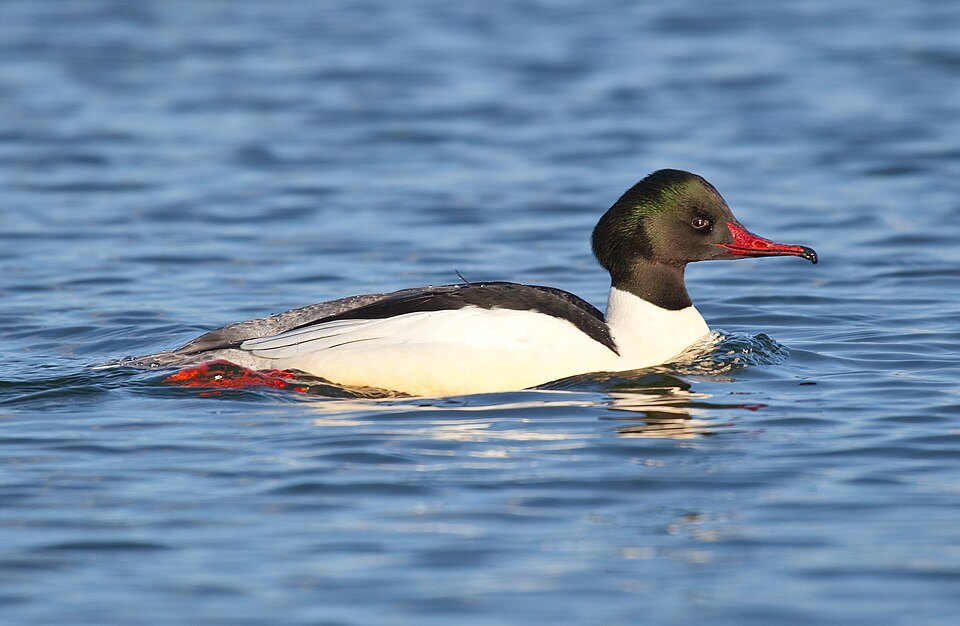
Red hooked bill; males have a green-black head, white body and black back. Females have a chestnut head sharply separated from the white neck. Heavier-headed than Red-breasted Merganser.
Habitat
Rivers, streams, lakeshores and flowing-water margins.
Behaviour
Dives for fish and usually nests in tree cavities.
When to look
Local year-round occurrence with additional winter visitors
Where to look
Local clear rivers and lakes, especially in the east and southeast.
Reference photos do not show every sex, age, season or geographic form; use the identification notes too.
Further reading:BirdWatch Ireland ↗ · Wikipedia ↗
COMMUNITY SIGHTINGS
Recent encounters
No public sightings yet.
Yours could be the first.