 Photo unavailable
Photo: neekoh.fi · CC BY 2.0 ↗
Alca torda
Razorbill
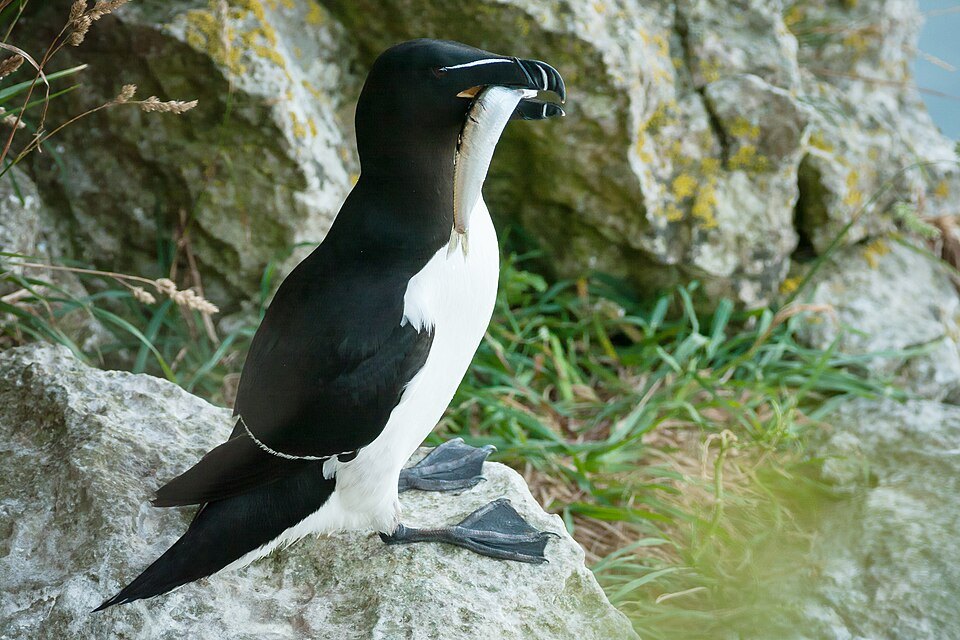
A black-and-white auk with a distinctive deep bill.
A recording has not been added yet. Use the identification notes below for now.
I know this bird · Record a sighting Where to look & how to find it ↓FIELDCRAFT · FIND WITH CARE
Finding guide
Choose the season, find the habitat, then watch patiently. Search guidance is not a measure of rarity or conservation status.
- When to go
- Offshore all year; easiest at breeding cliffs in spring and summer
- Where to start
- Use public viewpoints well away from cliff edges and breeding colonies.
- What to do when you arrive
- In spring and summer, view black-and-white seabirds from platforms, checking the deep flattened bill and white bill marking. Stay away from nesting rocks and take care on wet paths.
Habitat and behaviour reference: BirdWatch Ireland ↗ · The practical steps are editorial advice based on the references, not live sightings.
Markers show approximate public destinations or visitor bases, not individuals, nests, rare plants or exact entrances. Follow the operator’s routes and signs for access.
Base map: Natural Earth · Public domain
Destination positions: © OpenStreetMap contributors · ODbL
-
Rathlin West Light Seabird Centre
Operator or specialist guide
The RSPB visitor guide explicitly names these seabirds. Use the managed viewpoint in spring and summer; presence is not year-round or guaranteed.
Before you goLate spring–summer is the usual viewing season. Confirm current opening and ferries. The platform has 98 steps and is not accessible to everyone. Avoid cliff edges, burrows and closed areas.
Destination evidence & review date
Sources reviewed: · A review date is not a sighting date; recheck access before travelling.
How to identify it
Black above and white below with a deep, laterally flattened adult bill crossed by a fine white line and a white eye-to-bill line. Young have smaller bills; cheeks whiten in winter.
Habitat
Sea cliffs, rock faces, islands and adjacent open areas.
Behaviour
Dives for fish and nests in cliff crevices and on ledges.
When to look
Offshore all year; easiest at breeding cliffs in spring and summer
Where to look
Use public viewpoints well away from cliff edges and breeding colonies.
Reference photos do not show every sex, age, season or geographic form; use the identification notes too.
Further reading:BirdWatch Ireland ↗ · Wikipedia ↗
COMMUNITY SIGHTINGS
Recent encounters
No public sightings yet.
Yours could be the first.