 Photo unavailable
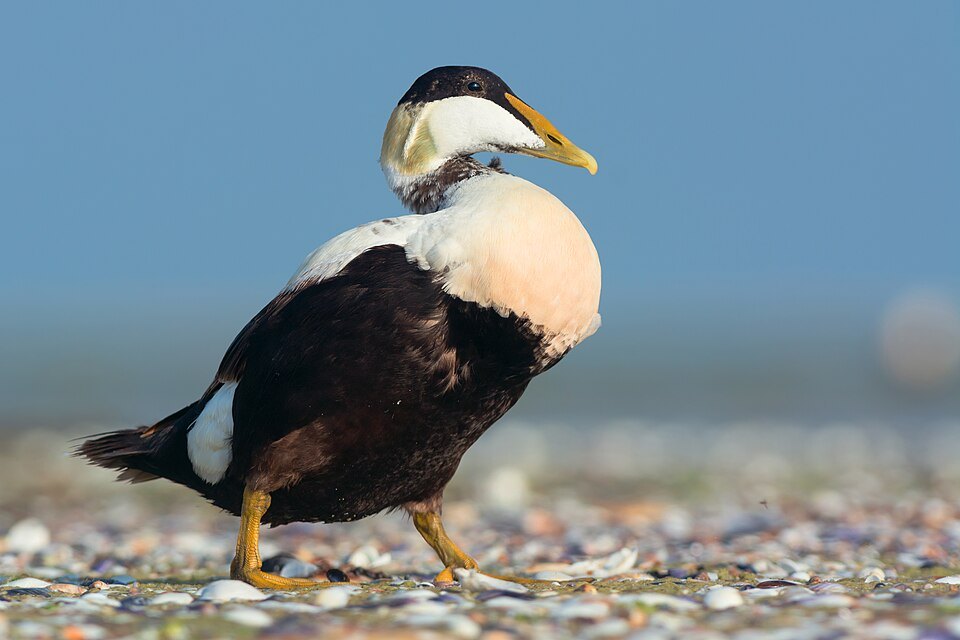
Photo: Ryzhkov Sergey · CC BY-SA 4.0 ↗
Somateria mollissima
Common Eider
A large sea duck most readily found along northern coasts.
A recording has not been added yet. Use the identification notes below for now.
I know this bird · Record a sighting Where to look & how to find it ↓FIELDCRAFT · FIND WITH CARE
Finding guide
Choose the season, find the habitat, then watch patiently. Search guidance is not a measure of rarity or conservation status.
- When to go
- All year, but locally distributed
- Where to start
- Especially rocky shores and bays in the north and northeast.
- What to do when you arrive
- Prioritise northern and northeastern coasts, comparing large ducks' wedge-shaped heads and plumage from harbour shores. Captive birds in collections are not wild occurrence records.
Habitat and behaviour reference: BirdWatch Ireland ↗ · The practical steps are editorial advice based on the references, not live sightings.
Markers show approximate public destinations or visitor bases, not individuals, nests, rare plants or exact entrances. Follow the operator’s routes and signs for access.
Base map: Natural Earth · Public domain
Destination positions: © OpenStreetMap contributors · ODbL
-
Rathlin · Church Bay public shore
Dated observation report
An RSPB Antrim report recorded wild Eider at Church Bay on 12 June 2023. This is a dated record, not live news or a record from the West Light platform.
Before you goCheck ferries and weather; watch from public shore, outside working harbour areas and rock crevices. Island transport and the West Light centre have separate seasonal arrangements.
Destination evidence & review date
Sources reviewed: · A review date is not a sighting date; recheck access before travelling.
How to identify it
Long sloping forehead and wedge-shaped bill. Males are black-and-white with a dark crown and pale green nape; females are barred brown but retain the distinctive head shape.
Habitat
Bays, harbours, coastal waters and offshore islands.
Behaviour
Dives for mussels and crustaceans, often in coastal groups.
When to look
All year, but locally distributed
Where to look
Especially rocky shores and bays in the north and northeast.
Reference photos do not show every sex, age, season or geographic form; use the identification notes too.
Further reading:BirdWatch Ireland ↗ · Wikipedia ↗
COMMUNITY SIGHTINGS
Recent encounters
No public sightings yet.
Yours could be the first.