 Photo unavailable
Photo: Andreas Trepte · CC BY-SA 2.5 ↗
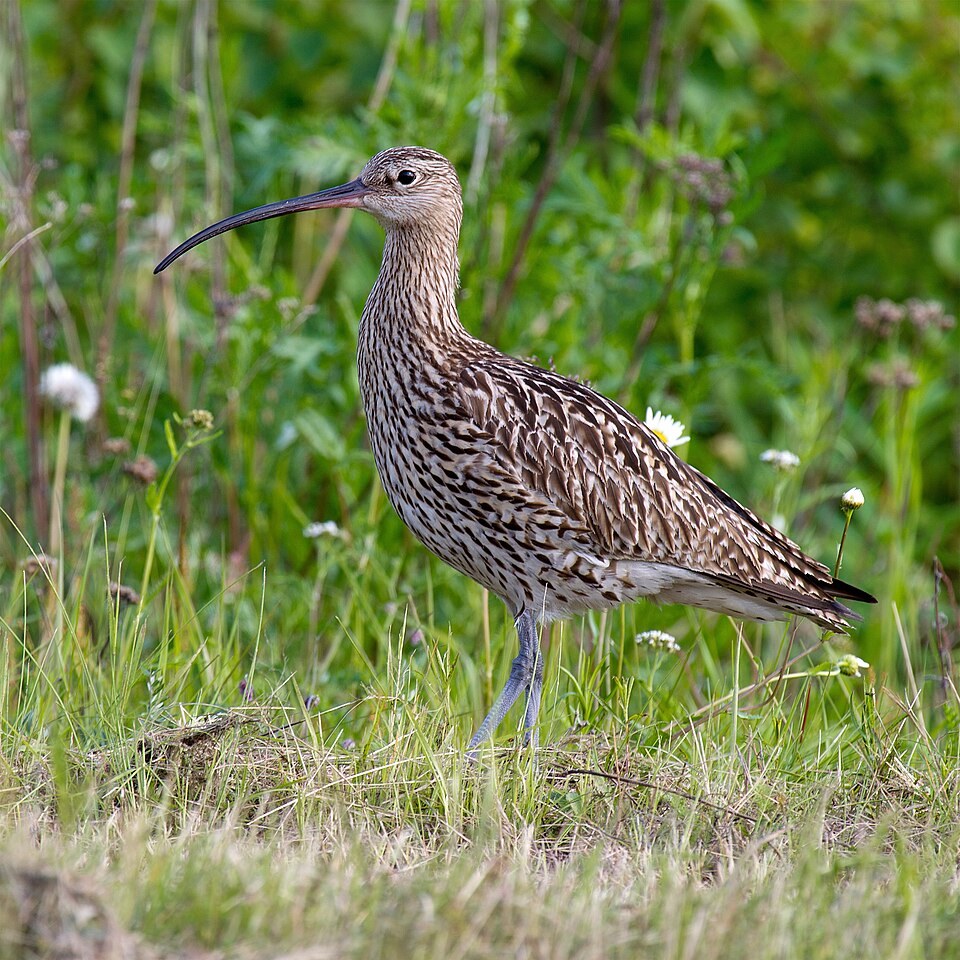
Numenius arquata
Eurasian Curlew
Its long, downcurved bill is unmistakable at a good view. Although winter birds still visit the bay, Ireland’s local breeding population has declined severely.
A recording has not been added yet. Use the identification notes below for now.
I know this bird · Record a sighting Where to look & how to find it ↓FIELDCRAFT · FIND WITH CARE
Finding guide
Choose the season, find the habitat, then watch patiently. Search guidance is not a measure of rarity or conservation status.
- When to go
- Mainly autumn and winter in Dublin Bay; some non-breeders stay in summer
- Where to start
- Bull Island, Sandymount Strand and shore viewpoints at Malahide and Rogerstown estuaries.
- What to do when you arrive
- Prefer autumn–winter estuaries and look for the very long downcurved bill. Watch feeding or resting flocks at a distance. Do not seek or disclose inland breeding sites; winter sightings do not imply a secure breeding population.
Habitat and behaviour reference: BirdWatch Ireland ↗ · The practical steps are editorial advice based on the references, not live sightings.
To avoid disturbance, nests, roosts and sensitive breeding locations are not mapped for these birds. Use the habitat advice above to watch from a distance and record natural encounters only.
How to identify it
A large, brown-streaked wader with a very long downcurved bill and a white rump in flight. Whimbrel usually has a shorter bill and stronger head stripes; do not force an identification from an unclear image.
Habitat
Estuaries, tidal mudflats and wet grassland; also inland open wetland when breeding.
Behaviour
Probes deeply into mud for worms and other prey. Gives a far-carrying, rising call and gathers at safe high-tide roosts.
When to look
Mainly autumn and winter in Dublin Bay; some non-breeders stay in summer
Where to look
Bull Island, Sandymount Strand and shore viewpoints at Malahide and Rogerstown estuaries.
Reference photos do not show every sex, age, season or geographic form; use the identification notes too.
Further reading:BirdWatch Ireland ↗
COMMUNITY SIGHTINGS
Recent encounters
No public sightings yet.
Yours could be the first.