 Photo unavailable
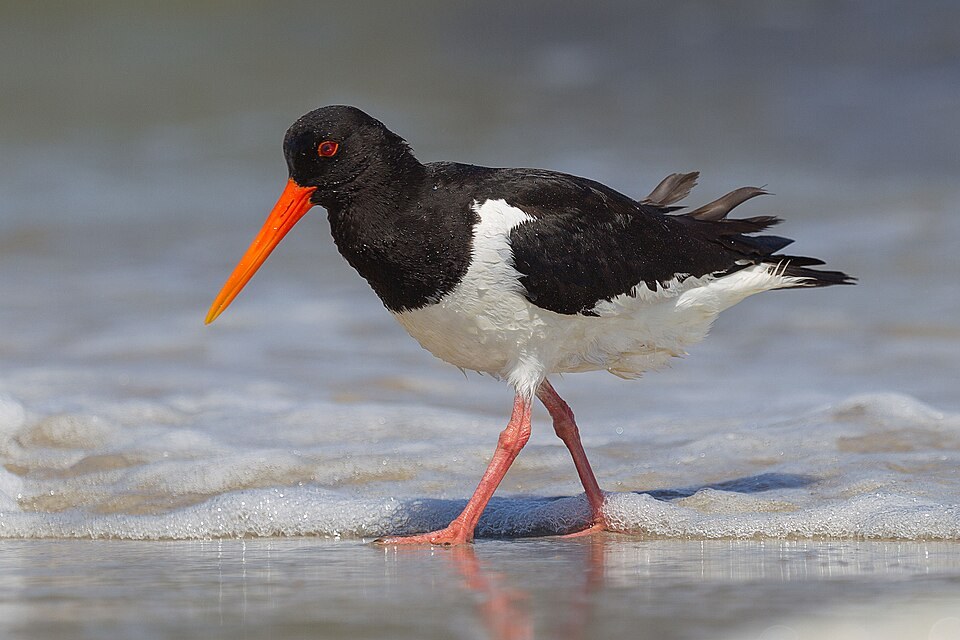
Photo: Andreas Trepte · CC BY-SA 2.5 ↗
Haematopus ostralegus
Eurasian Oystercatcher
Its black-and-white body and long orange-red bill make this one of the easiest Dublin shorebirds to recognise. Look for it searching mud and rocks as the tide retreats.
A recording has not been added yet. Use the identification notes below for now.
I know this bird · Record a sighting Where to look & how to find it ↓FIELDCRAFT · FIND WITH CARE
Finding guide
Choose the season, find the habitat, then watch patiently. Search guidance is not a measure of rarity or conservation status.
- When to go
- All year; numbers increase in autumn and winter
- Where to start
- Sandymount Strand, Bull Island, Merrion Gates and Booterstown. Watch exposed mudflats from public paths.
- What to do when you arrive
- On a falling tide, scan flats and rocks from shore for black-and-white birds with long orange-red bills. Keep well back from high-tide flocks.
Habitat and behaviour reference: BirdWatch Ireland ↗ · The practical steps are editorial advice based on the references, not live sightings.
How to identify it
Black head and back, white belly, long straight orange-red bill and pink legs. Broad white wing-bars show in flight. Winter birds may have a white throat band; young birds have a duller bill.
Habitat
Tidal mudflats, sandy beaches, rocky shores, estuaries and coastal grassland.
Behaviour
Opens or prises apart shellfish and also takes worms. Often roosts in flocks and makes loud piping calls in flight.
When to look
All year; numbers increase in autumn and winter
Where to look
Sandymount Strand, Bull Island, Merrion Gates and Booterstown. Watch exposed mudflats from public paths.
Reference photos do not show every sex, age, season or geographic form; use the identification notes too.
Further reading:BirdWatch Ireland ↗
COMMUNITY SIGHTINGS
Recent encounters
No public sightings yet.
Yours could be the first.