 Photo unavailable
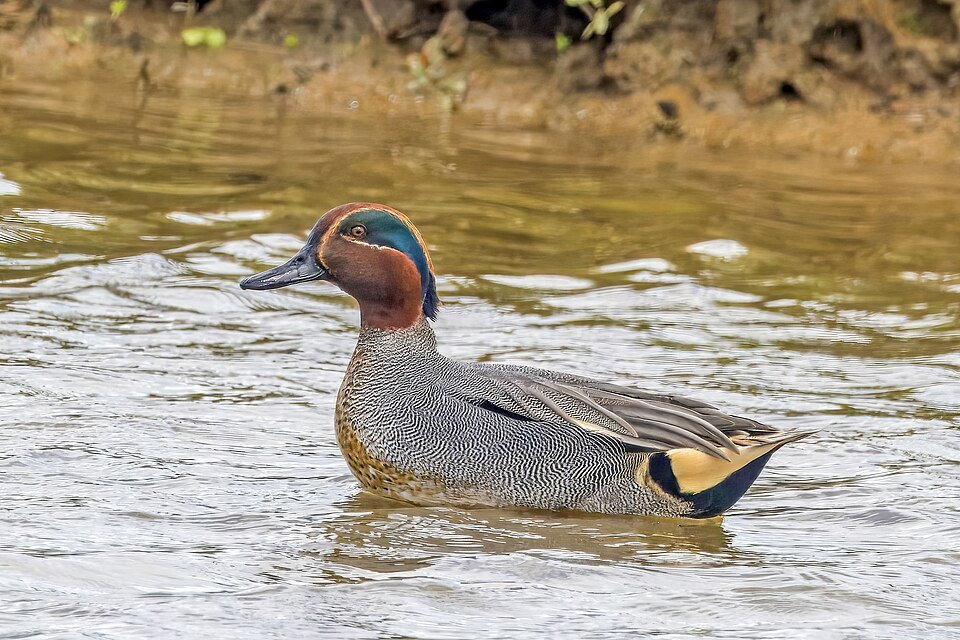
Photo: Charles J. Sharp · CC BY-SA 4.0 ↗
Anas crecca
Eurasian Teal
A very small duck often gathering in shallow water in winter.
A recording has not been added yet. Use the identification notes below for now.
I know this bird · Record a sighting Where to look & how to find it ↓FIELDCRAFT · FIND WITH CARE
Finding guide
Choose the season, find the habitat, then watch patiently. Search guidance is not a measure of rarity or conservation status.
- When to go
- Most accessible in autumn and winter; also breeds locally
- Where to start
- Shallow wetland reserve margins, flooded fields and estuary viewpoints.
- What to do when you arrive
- In autumn and winter, scan shallow margins and cover from hides for small ducks. Learn males first, then compare females; wait for birds to emerge rather than flushing them.
Habitat and behaviour reference: BirdWatch Ireland ↗ · The practical steps are editorial advice based on the references, not live sightings.
Markers show approximate public destinations or visitor bases, not individuals, nests, rare plants or exact entrances. Follow the operator’s routes and signs for access.
Base map: Natural Earth · Public domain
Destination positions: © OpenStreetMap contributors · ODbL
-
East Coast Nature Reserve · public viewpoints
Older site guide
BirdWatch Ireland’s Autumn 2014 site guide documents the associated waterbirds and Kingfisher, and summer Spotted Flycatcher. It establishes site associations, not current presence; follow the species season above.
Before you goVisits are possible year-round, but the coastal trail closes in winter: view from the adjoining sea bank then. Stay on marked routes, keep gates closed and respect fences. Parking is limited, surfaces uneven; only guide dogs are permitted.
Destination evidence & review date
Sources reviewed: · A review date is not a sighting date; recheck access before travelling.
-
Belfast Window on Wildlife
Operator or specialist guide
The RSPB visitor guide names Lapwing, Wigeon and Teal. Only public visitor-site associations are used, not assumed views of birds from inaccessible reserve compartments.
Before you goCheck the date-specific calendar: centre, hides and reserve have different hours. Harbour Meadows is not public access; accessibility also differs between roadside and trackside hides.
Destination evidence & review date
Sources reviewed: · A review date is not a sighting date; recheck access before travelling.
How to identify it
Males have a chestnut head with a green eye patch, horizontal white flank stripe and yellow tail-side patches. Females are mottled brown; both have green specula. American Green-winged Teal males have a vertical white stripe.
Habitat
Marshes, shallow lakes, wet grassland, estuaries and water margins.
Behaviour
Dabbles in shallow water for seeds and small invertebrates.
When to look
Most accessible in autumn and winter; also breeds locally
Where to look
Shallow wetland reserve margins, flooded fields and estuary viewpoints.
Reference photos do not show every sex, age, season or geographic form; use the identification notes too.
Further reading:BirdWatch Ireland ↗ · Wikipedia ↗
COMMUNITY SIGHTINGS
Recent encounters
No public sightings yet.
Yours could be the first.