 Photo unavailable
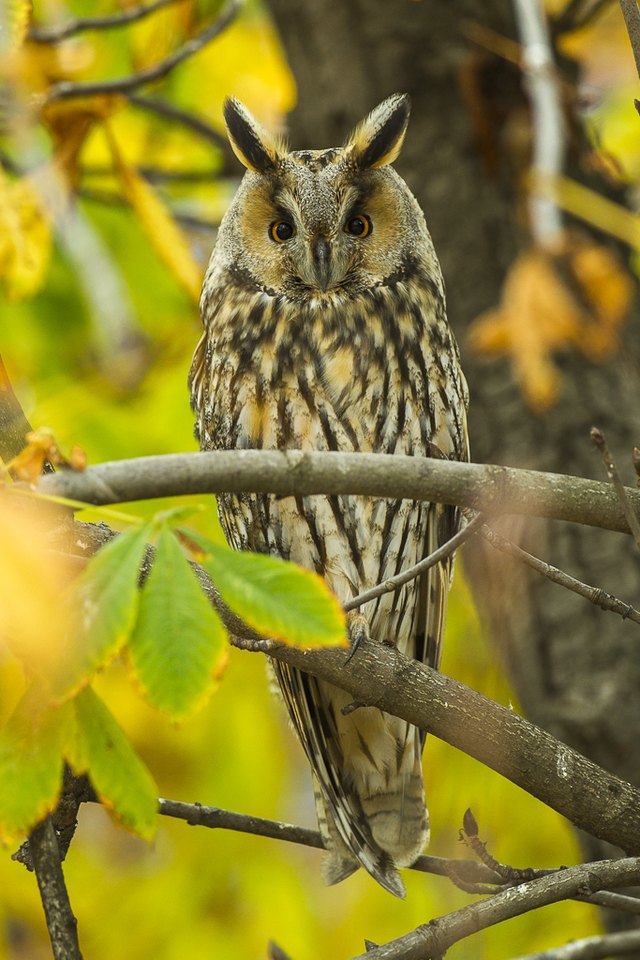
Photo: Francesco Veronesi from Italy · CC BY-SA 2.0 ↗
Asio otus
Long-eared Owl
A secretive woodland owl whose ear tufts are not always raised.
A recording has not been added yet. Use the identification notes below for now.
I know this bird · Record a sighting Where to look & how to find it ↓FIELDCRAFT · FIND WITH CARE
Finding guide
Choose the season, find the habitat, then watch patiently. Search guidance is not a measure of rarity or conservation status.
- When to go
- All year, but secretive and easily overlooked
- Where to start
- Watch foliage and trunks from public paths through mature woodland.
- What to do when you arrive
- Watch natural dusk flights from public routes only. Do not search woodland for daytime roosts, use playback or lights, or share roost locations.
Habitat and behaviour reference: BirdWatch Ireland ↗ · The practical steps are editorial advice based on the references, not live sightings.
To avoid disturbance, nests, roosts and sensitive breeding locations are not mapped for these birds. Use the habitat advice above to watch from a distance and record natural encounters only.
How to identify it
Orange eyes, warm facial disc and heavily streaked plumage; long ear tufts can be flattened. Check facial pattern carefully against Short-eared Owl.
Habitat
Woodland, mature trees, wooded edges and gardens.
Behaviour
Hunts small mammals over open ground at night and rests in cover by day.
When to look
All year, but secretive and easily overlooked
Where to look
Watch foliage and trunks from public paths through mature woodland.
Reference photos do not show every sex, age, season or geographic form; use the identification notes too.
Further reading:BirdWatch Ireland ↗ · Wikipedia ↗
COMMUNITY SIGHTINGS
Recent encounters
No public sightings yet.
Yours could be the first.