 Photo unavailable
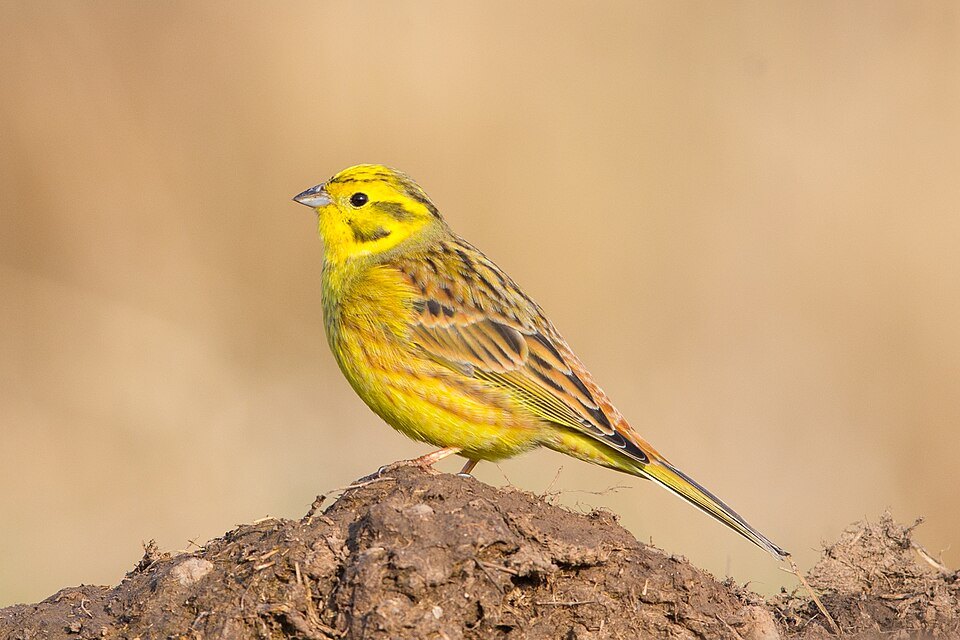
Photo: Andreas Trepte · CC BY-SA 2.5 ↗
Emberiza citrinella
Yellowhammer
A yellow farmland bunting, now local rather than common everywhere in Ireland.
A recording has not been added yet. Use the identification notes below for now.
I know this bird · Record a sighting Where to look & how to find it ↓FIELDCRAFT · FIND WITH CARE
Finding guide
Choose the season, find the habitat, then watch patiently. Search guidance is not a measure of rarity or conservation status.
- When to go
- All year, but locally distributed
- Where to start
- Look especially around hedged arable land and seed-rich stubbles in the east and southeast.
- What to do when you arrive
- Watch hedge tops and stubbles beside arable fields from public routes. Yellow males are conspicuous, but distribution is local; a missed visit does not prove absence.
Habitat and behaviour reference: BirdWatch Ireland ↗ · The practical steps are editorial advice based on the references, not live sightings.
Markers show approximate public destinations or visitor bases, not individuals, nests, rare plants or exact entrances. Follow the operator’s routes and signs for access.
Base map: Natural Earth · Public domain
Destination positions: © OpenStreetMap contributors · ODbL
-
Corofin information point → Burren public trails
Watching suggestion, not a sighting
A BirdWatch Ireland May 2024 Mullaghmore outing listed Yellowhammer among hoped-for birds: a seasonal watching recommendation, not a confirmed sighting. The marker is the Corofin information point, not a bird location.
Before you goCheck open routes around Mullaghmore, seasonal services and transport with the information point; do not assume year-round shuttles. Use waymarked trails, follow parking advice and stay off private limestone fields.
Destination evidence & review date
Sources reviewed: · A review date is not a sighting date; recheck access before travelling.
How to identify it
Males have a yellow head and underside, streaked brown back and chestnut rump. Females are more streaked and less yellow; longer-bodied and longer-tailed than Siskin.
Habitat
Arable fields, stubbles, hedges and open woodland edges.
Behaviour
Eats grain and wild seeds, feeding insects to its young.
When to look
All year, but locally distributed
Where to look
Look especially around hedged arable land and seed-rich stubbles in the east and southeast.
Reference photos do not show every sex, age, season or geographic form; use the identification notes too.
Further reading:BirdWatch Ireland ↗ · Wikipedia ↗
COMMUNITY SIGHTINGS
Recent encounters
No public sightings yet.
Yours could be the first.