 Photo unavailable
Photo: Sten Porse · CC BY-SA 3.0 ↗
Rumex obtusifolius
Broad-leaved Dock
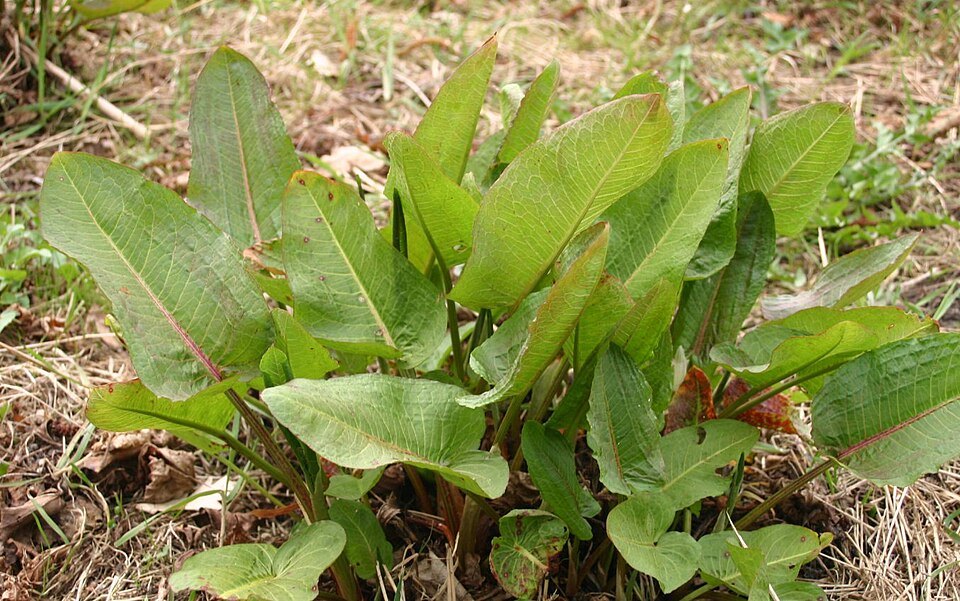
Large broad leaves sit beneath reddish-brown seed spikes that often rise above the surrounding grass.
See all four seasons Explore fruits, seeds & edibility ↓ Where to look & how to find it ↓Some plants are poisonous. Do not identify by a photograph alone, and never taste them.
FIELDCRAFT · FIND WITH CARE
Finding guide
Choose the season, find the habitat, then watch patiently. Search guidance is not a measure of rarity or conservation status.
- When to go
- Usually flowers June–October; brown fruiting stems may persist into winter.
- Where to start
- Irish field margins and disturbed grassland. Check both leaves and fruits rather than size alone.
- What to do when you arrive
- Start with broad leaves at field edges, then compare tall reddish-brown fruiting stems. Similar docks require leaf-base and fruit features, not plant size alone.
Habitat and behaviour reference: Irish Wildflowers · Jenny Seawright ↗ · The practical steps are editorial advice based on the references, not live sightings.
ONE PLANT · FOUR SEASONS
One plant. Four seasons.
Look beyond the flowers: fresh leaves, fruits, bare stems and dormancy.
Meteorological seasons: spring March–May, summer June–August, autumn September–November and winter December–February. Irish weather, cultivar, pruning and plant age affect timing and appearance.
Photos illustrate the relevant feature, not the same plant photographed through a year in Ireland. Features shared across seasons, such as evergreen leaves, may use the same reference. Missing reliable photos are marked; dormancy is not death.
Spring
Mar–May Photo unavailable
Feature reference photo ↗
Foliage and growth
Large broad basal leaves form rosettes with gently wavy margins.
Summer
Jun–Aug Photo unavailable
Feature reference photo ↗
Flowers
Tall branched stems carry tiny green flowers, gradually becoming fruiting spikes.
Autumn
Sep–Nov Photo unavailable
Feature reference photo ↗
Seeds and spent flowers
Reddish-brown fruiting spikes stand out above green or yellowing broad leaves.
Winter
Dec–Feb
Photo unavailable
Feature reference photo ↗
Seeds and spent flowers
Dry seed stems may stand above surviving basal leaves; mowing greatly changes the view.
Seasonal references: Irish Wildflowers · Jenny Seawright ↗ · Photo resized, converted to JPEG and stripped of metadata.
FRUIT · SEED · FOOD SAFETY
Fruits, seeds & edibility
Know the structure, then the part. Recognising a plant does not make it food.
Fruit
Photo unavailable
Fruiting stems with persistent floral valves, not exposed seeds.
Emőke Dénes · CC BY-SA 4.0 ↗ License termsThree-angled nutlets are enclosed by three enlarged floral valves on often reddish-brown stems.
- Food use of this part
- Food safety not established by this guide
Seeds & dispersal units
 Photo unavailable
Three-angled nutlets: the dispersal units enclosing seeds.
Rasbak · CC BY-SA 3.0 ↗ License termsEach nutlet contains one seed; the surrounding wing-like valves are not seed wings.
- Food use of this part
- Food safety not established by this guide
Some seed references show intact one-seeded fruits or dispersal units, as identified in their captions. A whole-fruit photo is not a close-up of the enclosed seed. Cones and arils are not true fruits of flowering plants.
Sources & limitations
- Irish Wildflowers · Jenny Seawright ↗ · Botanical description, not proof of food safety
- PubMed · Rumex obtusifolius composition study ↗
No field detoxification methods or safe doses are provided. Never taste a plant to identify it or eat treated or contaminated specimens. Seek professional help after suspected accidental ingestion. National Poisons Information Centre, Ireland ↗
Photo resized, converted to JPEG and stripped of metadata.
How to identify it
Broad basal leaves have roughly heart-shaped bases and wavy edges. Tiny green flowers become branching brown fruiting spikes; fruit details help separate docks.
Where it grows
Pastures, verges, gardens and waste ground.
Growth and ecology
A deep-rooted perennial whose seeds can remain in the soil for many years.
Flowering and seasons
Usually flowers June–October; brown fruiting stems may persist into winter.
Where to look
Irish field margins and disturbed grassland. Check both leaves and fruits rather than size alone.
Seasons vary with weather and location. Suggested habitats are places to look, not guaranteed sightings. Photos show only some features; check leaves, flowers, fruits and specialist references together.
Further reading:Irish Wildflowers · Jenny Seawright ↗
Photo license: Sten Porse · CC BY-SA 3.0 ↗ · License terms ↗
Photo resized, converted to JPEG and stripped of metadata.