 Photo unavailable
Photo: No machine-readable author provided. MPF assumed (based on copyright claims). · CC BY 2.5 ↗
Fraxinus excelsior
Ash
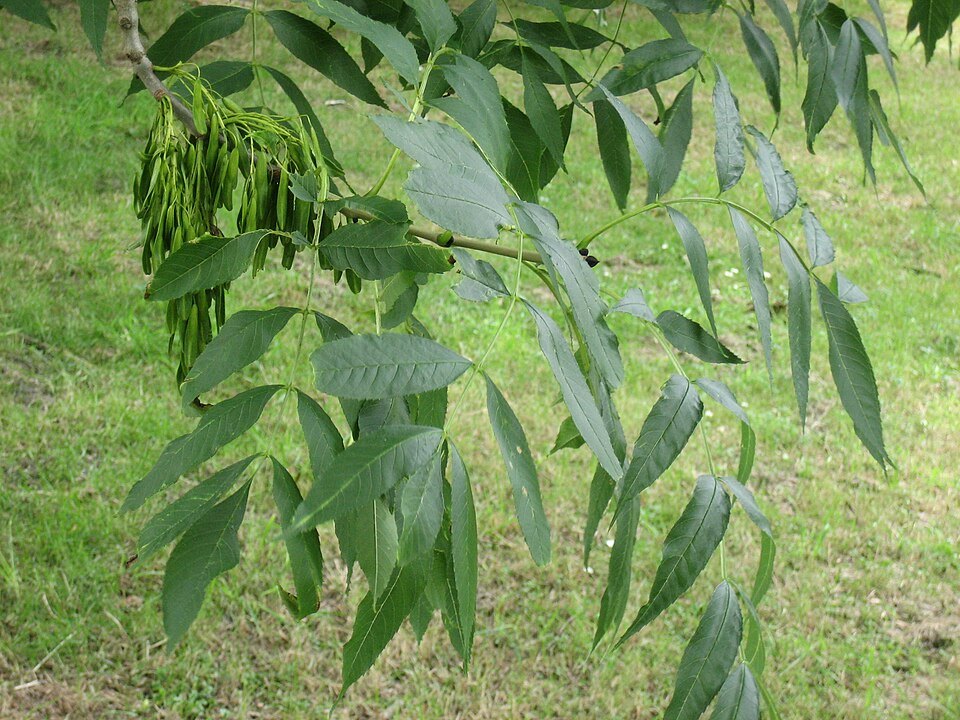
Black winter buds and bunches of winged keys help identify ash. Irish ash trees are affected by ash dieback disease.
See all four seasons Explore fruits, seeds & edibility ↓ Where to look & how to find it ↓Some plants are poisonous. Do not identify by a photograph alone, and never taste them.
FIELDCRAFT · FIND WITH CARE
Finding guide
Choose the season, find the habitat, then watch patiently. Search guidance is not a measure of rarity or conservation status.
- When to go
- Flowers before leaves in spring; keys in late summer and autumn; buds in winter.
- Where to start
- Irish hedgerows and broadleaf woodland edges. Follow local warnings about diseased trees and falling branches.
- What to do when you arrive
- Check opposite black buds from the ground in winter, pinnate leaves in summer and clusters of winged fruits later. Respect disease and falling-branch warnings; avoid damaged limbs overhead.
Habitat and behaviour reference: Tree Council of Ireland ↗ · The practical steps are editorial advice based on the references, not live sightings.
Markers show approximate public destinations or visitor bases, not individuals, nests, rare plants or exact entrances. Follow the operator’s routes and signs for access.
Base map: Natural Earth · Public domain
Destination positions: © OpenStreetMap contributors · ODbL
-
Muckross base · Reenadinna public woodland walk
Operator or specialist guide
NPWS explicitly names Yew, Hazel, Ash and Holly in the yew woodland, reached by an official walk. The marker is only the Muckross visitor base, not an individual tree location.
Before you goUse official routes such as Arthur Young’s Walk and current notices, staying on paths to protect moss and roots. Gardens have separate hours; woodland routes may close for flooding, falling branches or management. Do not collect plants.
Destination evidence & review date
Sources reviewed: · A review date is not a sighting date; recheck access before travelling.
ONE PLANT · FOUR SEASONS
One plant. Four seasons.
Look beyond the flowers: fresh leaves, fruits, bare stems and dormancy.
Meteorological seasons: spring March–May, summer June–August, autumn September–November and winter December–February. Irish weather, cultivar, pruning and plant age affect timing and appearance.
Photos illustrate the relevant feature, not the same plant photographed through a year in Ireland. Features shared across seasons, such as evergreen leaves, may use the same reference. Missing reliable photos are marked; dormancy is not death.
Spring
Mar–May Photo unavailable
Feature reference photo ↗
Shoots and buds
Black buds open; flowers may precede the relatively late leaves.
Summer
Jun–Aug Photo unavailable
Feature reference photo ↗
Foliage and growth
Pinnate leaves form the crown as green winged keys develop.
Autumn
Sep–Nov Photo unavailable
Feature reference photo ↗
Fruits
Bunches of keys brown and leaves often fall early; disease can alter the timing.
Winter
Dec–Feb Photo unavailable
Feature reference photo ↗
Bare branches or dry stems
Black opposite buds and some persistent keys aid identification on generally leafless crowns.
Seasonal references: Tree Council of Ireland ↗ · Photo resized, converted to JPEG and stripped of metadata.
FRUIT · SEED · FOOD SAFETY
Fruits, seeds & edibility
Know the structure, then the part. Recognising a plant does not make it food.
Fruit
Photo unavailable
Clusters of samaras; the seeds remain enclosed in the fruits.
Kieran Roy Powell · CC BY 4.0 ↗ License termsElongated samaras hang in bunches and are commonly called ash keys.
- Food use of this part
- Food safety not established by this guide
Seeds & dispersal units
 Photo unavailable
A longitudinal seed section showing the embryo inside.
Gmihail at Serbian Wikipedia · CC BY-SA 3.0 rs ↗ License termsThe seed lies in the thicker end of the samara; the complete winged structure is a fruit.
- Food use of this part
- Food safety not established by this guide
Some seed references show intact one-seeded fruits or dispersal units, as identified in their captions. A whole-fruit photo is not a close-up of the enclosed seed. Cones and arils are not true fruits of flowering plants.
Sources & limitations
- Tree Council of Ireland ↗ · Botanical description, not proof of food safety
No field detoxification methods or safe doses are provided. Never taste a plant to identify it or eat treated or contaminated specimens. Seek professional help after suspected accidental ingestion. National Poisons Information Centre, Ireland ↗
Photo resized, converted to JPEG and stripped of metadata.
How to identify it
Opposite pinnate leaves, usually black winter buds and clusters of narrow winged fruits. Disease, pruning and age can alter the crown.
Where it grows
Woods, hedges, limestone ground and parks.
Growth and ecology
A deciduous tree leafing relatively late and supporting many insects. Avoid damaged trees and do not move diseased branches.
Flowering and seasons
Flowers before leaves in spring; keys in late summer and autumn; buds in winter.
Where to look
Irish hedgerows and broadleaf woodland edges. Follow local warnings about diseased trees and falling branches.
Seasons vary with weather and location. Suggested habitats are places to look, not guaranteed sightings. Photos show only some features; check leaves, flowers, fruits and specialist references together.
Further reading:Tree Council of Ireland ↗
Photo license: No machine-readable author provided. MPF assumed (based on copyright claims). · CC BY 2.5 ↗ · License terms ↗
Photo resized, converted to JPEG and stripped of metadata.